GST E-Invoicing for Small Businesses: Who Needs It and How to Set It Up
It usually starts with a phone call from a buyer's accountant. "Your invoice doesn't have an IRN. We can't book it." Until that moment, plenty of growing businesses don't realise the rules changed under them.
Here's the short version of GST e-invoicing for small business owners: if your business's aggregate turnover has crossed ₹5 crore in any financial year since 2017-18, you must report every B2B invoice to a government portal and get an Invoice Reference Number before the invoice is valid. If you've never crossed that line, it doesn't apply to you yet.
This guide gives you a simple three-question test to know where you stand, explains the separate 30-day rule that catches bigger businesses, and walks through setting up and generating your first e-invoice — plus the mistakes that most often lead to penalties.
What is GST e-invoicing?
The name is misleading. E-invoicing doesn't mean the government creates your invoice. You still make the invoice in your own billing or accounting software. What changes is the next step: before you hand it to the buyer, you report the invoice details to an Invoice Registration Portal (IRP).
The IRP checks the data and sends back three things:
- an IRN (Invoice Reference Number), a unique number for that invoice
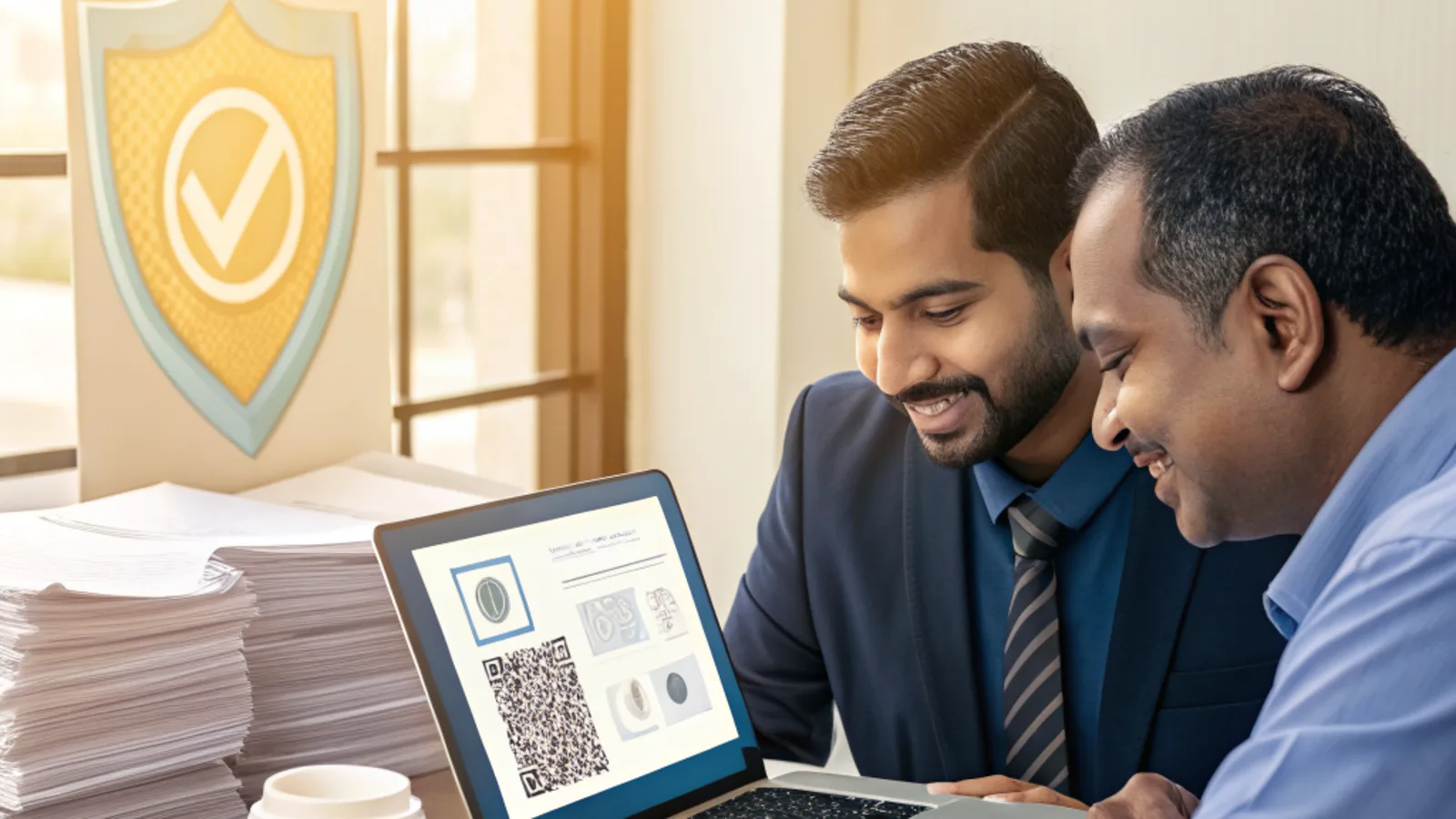
- a digitally signed QR code that you print on the invoice
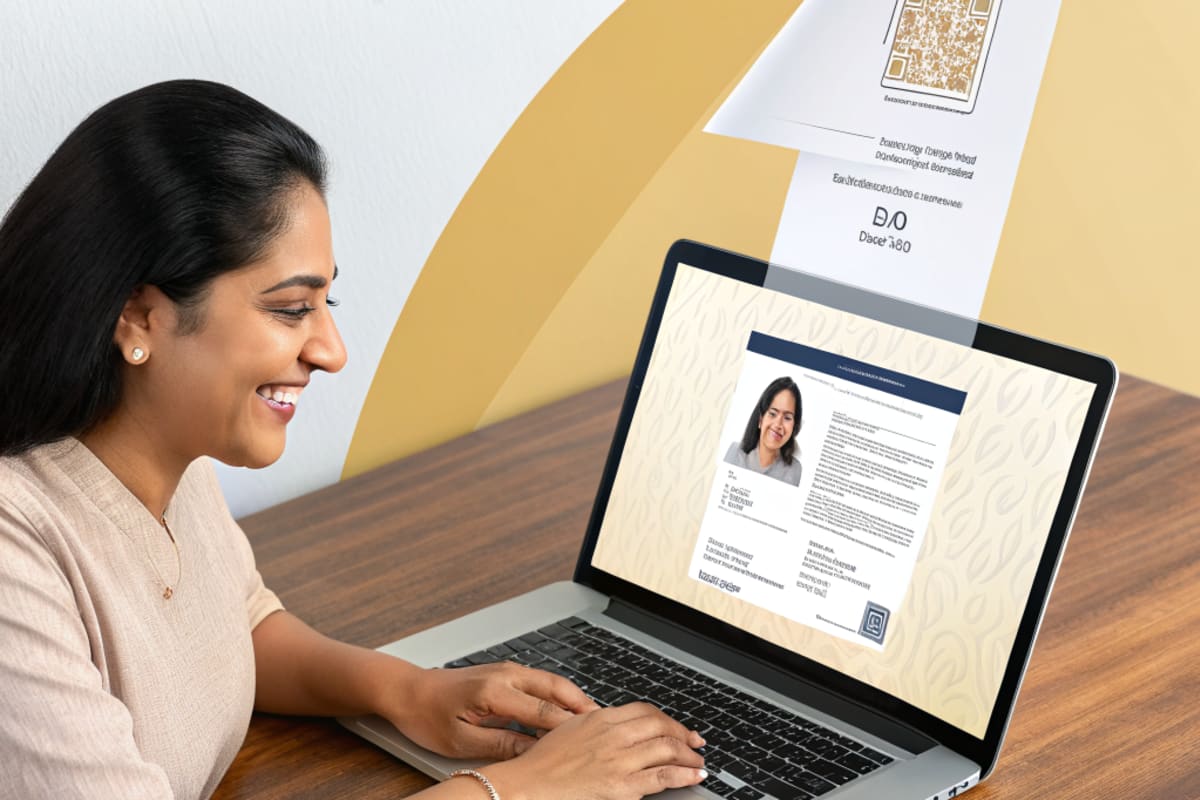
- a signed copy of the invoice data
From there, the details flow automatically into your GSTR-1 and can be used to create the e-way bill, so you type the same information fewer times. There are six government-authorised IRPs, from einvoice1.gst.gov.in to einvoice6.gst.gov.in, plus a master information portal at einvoice.gst.gov.in, and generating IRNs is free.
Does e-invoicing apply to your business?
Answer three questions in order.
1. What is your aggregate turnover, counted at PAN level? Add up the turnover of every GST registration under the same PAN. A business with three state registrations of ₹2 crore each has an aggregate turnover of ₹6 crore, even though no single GSTIN is above ₹5 crore.
2. Has that number exceeded ₹5 crore in any financial year from 2017-18 onwards? Not just this year — any year. And "exceeded" matters: turnover of exactly ₹5 crore doesn't trigger the mandate. Once you've crossed it, e-invoicing stays applicable even if sales later fall.
3. Is your business in an exempt category? If yes, the turnover doesn't matter (see the list below).
If your answers are "above ₹5 crore" and "not exempt", e-invoicing applies to your B2B invoices, exports and supplies to SEZs, along with related credit and debit notes. Sales to ordinary consumers (B2C) are not covered.
| Situation | Does e-invoicing apply? |
|---|---|
| One GSTIN, turnover ₹4.2 crore every year since 2017-18 | No |
| Two GSTINs under one PAN: ₹3 crore + ₹2.5 crore last year | Yes — ₹5.5 crore at PAN level |
| ₹6.2 crore in FY 2023-24, ₹3.8 crore now | Yes — once crossed, it stays |
| ₹5 crore exactly | No — it must exceed ₹5 crore |
| Bank or NBFC with ₹50 crore turnover | No — exempt category |
The threshold came down in stages, from ₹500 crore when e-invoicing started in October 2020 to ₹5 crore from 1 August 2023, so many businesses that were outside it a few years ago are inside it now.
Who is exempt
Some types of businesses don't need to e-invoice at all, whatever their turnover:
- SEZ units (SEZ developers are not exempt)
- insurers, banking companies and financial institutions, including NBFCs
- goods transport agencies (GTAs)
- suppliers of passenger transportation services
- suppliers of admission to films in multiplex screens
- government departments and local authorities
The exemption applies to the business as a whole, not to individual transactions.
The 30-day reporting rule for ₹10 crore+ businesses
This is a second, separate threshold, and it's the one people mix up most.
From 1 April 2025, businesses with aggregate annual turnover of ₹10 crore or more cannot report an invoice, credit note or debit note to the IRP if it is more than 30 days old. The portal simply blocks it. No IRN means no valid invoice, and the buyer can't claim input tax credit on it.
If your turnover is between ₹5 crore and ₹10 crore, you still have to e-invoice, but the portal doesn't apply this hard 30-day block to you yet. Don't treat that as permission to batch invoices at month-end. The safest habit is to generate the IRN at the moment you raise the invoice, every time.
The IRPs also now require two-factor authentication for logins, so keep the registered mobile number current.
How to register on the e-invoice portal
You can do this in under an hour. The steps below follow the NIC portal at einvoice1.gst.gov.in, which most small businesses use.
- Check that your GSTIN is enabled. On the portal, open the e-invoice enablement status option and enter your GSTIN. Enablement is based on the turnover in your GST returns. If you're required to e-invoice but aren't enabled, the portal lets you request enablement.
- Register or log in. If you already use the e-way bill portal, you can usually log in with the same credentials. If not, register with your GSTIN and the mobile number linked to your GST registration, then create a username and password.
- Set up two-factor authentication on your registered mobile.
- Choose how you'll generate IRNs. Small volumes can be handled through the portal itself. If you raise more than a handful of invoices a day, connect your billing or accounting software to the IRP through its API, either directly or through a GST Suvidha Provider (GSP). Most popular Indian billing apps now offer this as a built-in feature.
If your PAN details don't match GST records, registration won't go through until you fix the mismatch on the GST portal.
How to generate your first e-invoice
Once you're set up, the daily flow looks like this:
- Create the invoice in your software as usual, with the buyer's correct GSTIN, HSN codes, tax rates and place of supply.
- Report it to the IRP. In integrated software this is one click. On the portal you upload the invoice data in the government's format.
- Receive the IRN and signed QR code. Your software adds the QR code to the invoice.
- Send the invoice to your buyer. Only now is it a valid tax invoice.
- Let GSTR-1 fill itself. The reported details flow into your GSTR-1, which you review before filing.
An e-invoice can't be edited on the portal after the IRN is generated. If you spot a mistake quickly, you can cancel the IRN within 24 hours of generating it — as long as no active e-way bill is linked to it — and issue a fresh invoice. After that, fix it with a credit note or debit note, or amend the details in your GSTR-1.
Common mistakes and penalties
Most e-invoicing trouble comes from a few avoidable errors.
| Mistake | What happens | How to avoid it |
|---|---|---|
| Checking turnover per GSTIN instead of per PAN | You think you're exempt when you aren't | Add up all registrations under your PAN |
| Thinking it no longer applies after sales dropped | Invoices issued without IRN | Once crossed, keep e-invoicing |
| Issuing a B2B invoice without an IRN | Invoice is invalid; buyer can't claim ITC | Generate the IRN before sending |
| Reporting late (₹10 crore+) | IRP blocks documents older than 30 days | Report on the day you invoice |
| Forgetting credit and debit notes | Mismatch in returns | Report them to the IRP too |
| Wrong buyer GSTIN | Rejection or a wrong invoice you must cancel | Validate GSTINs in your software |
The penalty side is serious. An invoice that should carry an IRN but doesn't is treated as an invalid invoice. Under Section 122 of the CGST Act, the penalty for not issuing a proper invoice is ₹10,000 or the tax due, whichever is higher. Goods moving with an invalid invoice can also be detained in transit. The bigger cost is often commercial: buyers who can't claim input tax credit stop ordering from suppliers who keep getting this wrong.
Below ₹5 crore? What to do now
Most small businesses in India are below the threshold, and for them e-invoicing isn't mandatory today. That doesn't mean you can ignore it.
- Track turnover at PAN level every quarter. The moment you cross ₹5 crore in a financial year, you need to be ready.
- Pick billing software that already supports e-invoicing, even if you don't use the feature yet. Switching software in a hurry is where errors creep in.
- Keep buyer GSTINs and HSN codes clean in your customer and product lists now.
- Talk to your CA before you cross the line, especially if you're adding a new state registration.
- Automate the follow-ups. Payment reminders and invoice emails are good jobs for an AI assistant — see our guide to AI agents for small business in India.
Key takeaways
- E-invoicing applies if your PAN-level turnover exceeded ₹5 crore in any financial year since 2017-18, unless you're in an exempt category.
- It covers B2B invoices, exports and SEZ supplies, plus related credit and debit notes — not B2C sales.
- At ₹10 crore and above, the IRP blocks documents older than 30 days.
- Registration is free and quick; integrated billing software makes the daily process almost invisible.
- An invoice without a required IRN is invalid — and your buyer loses input tax credit.